The Blood Red Sphinx
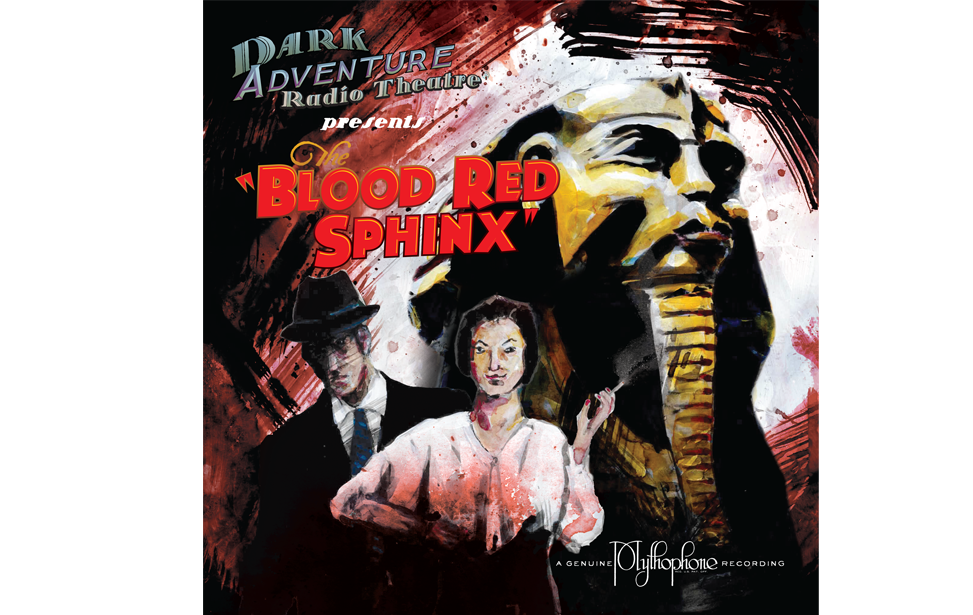
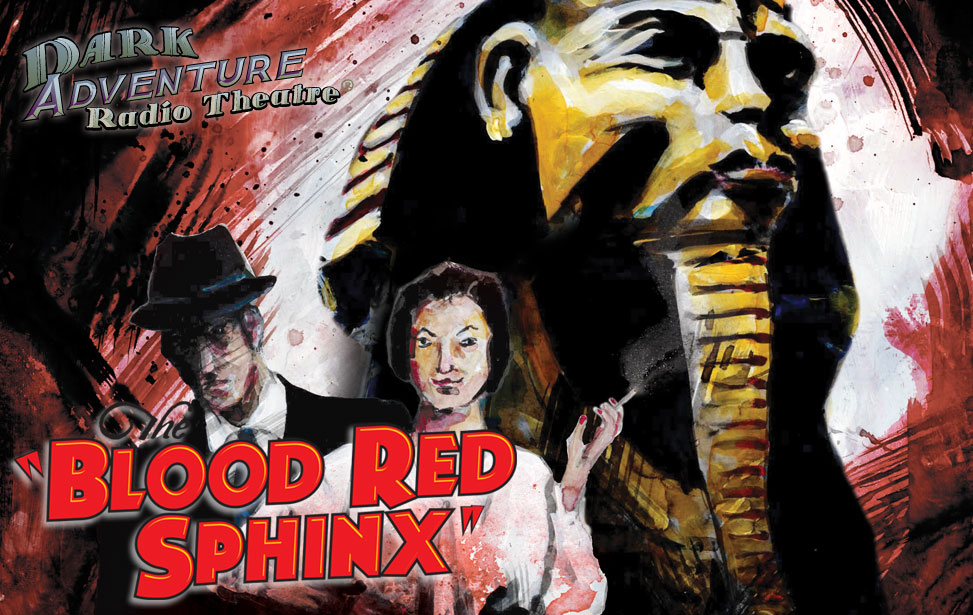
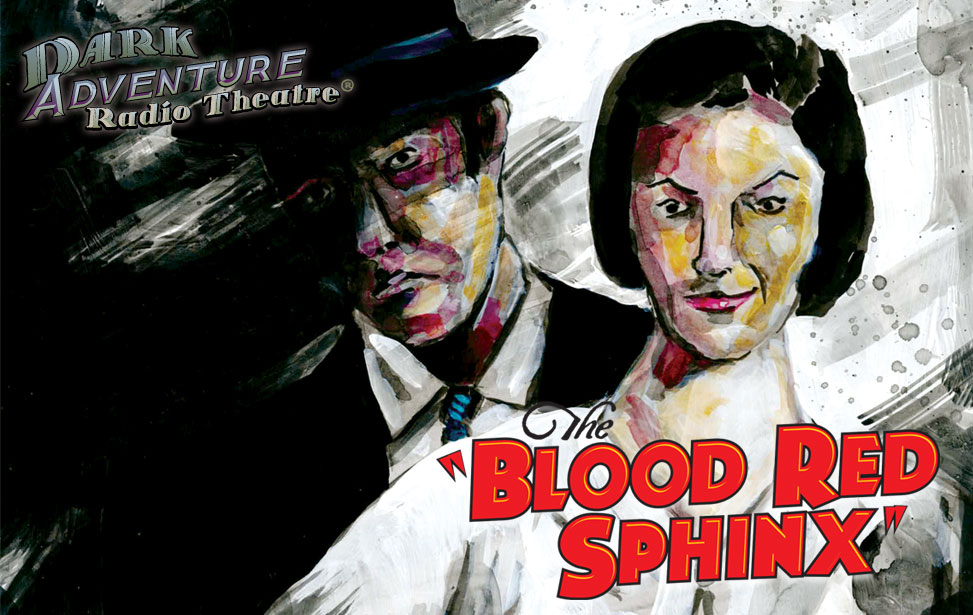
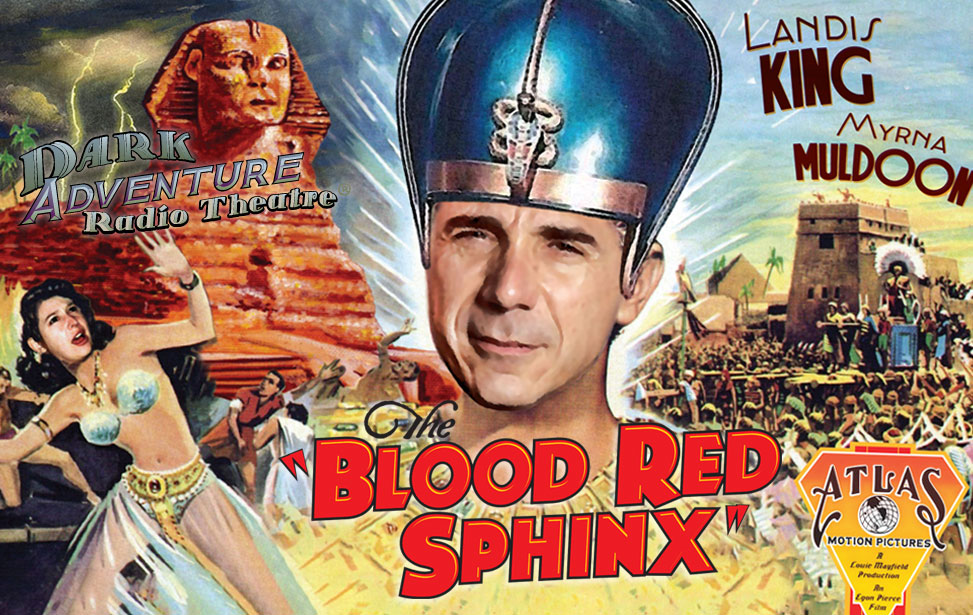
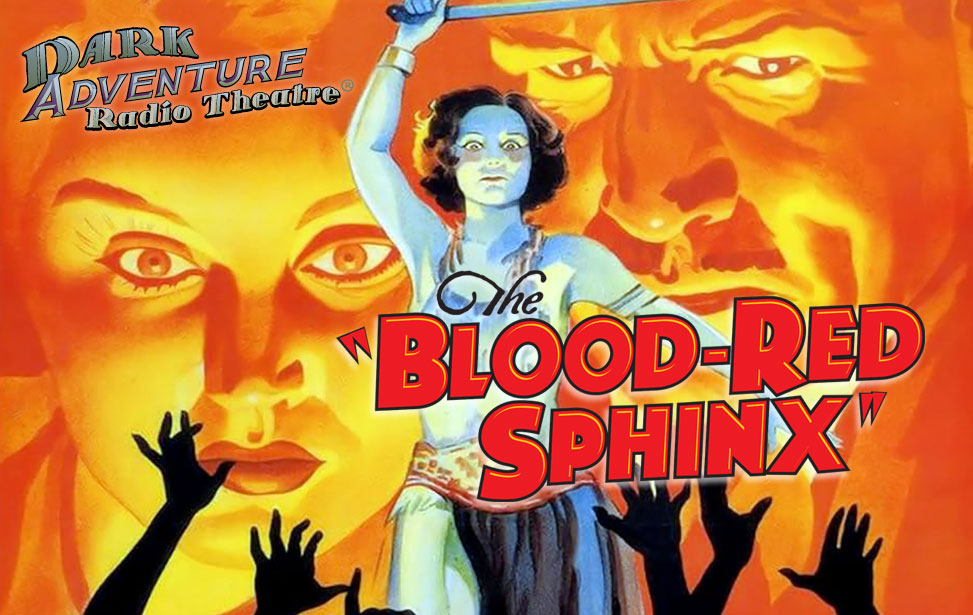
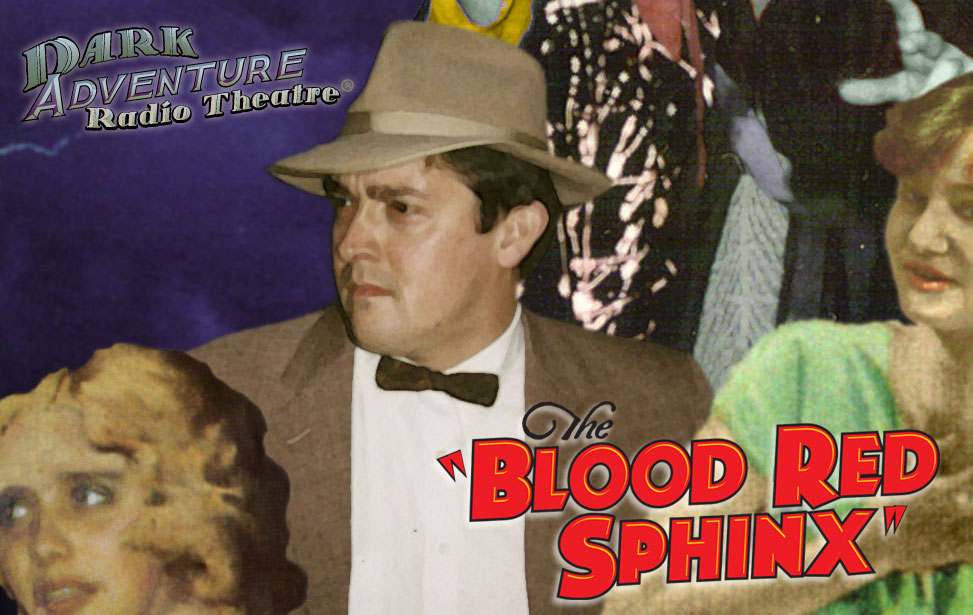
In the midst of the Great Depression, a Los Angeles private eye lands a case that seems too good to be true. But his client is connected to a big-budget motion picture, "The Blood-Red Sphinx", and the odd mystic behind the production. Can one man make a stand against a web of Hollywood intrigues, or is the world doomed by rising shadows? This Hollywood noir episode is too big to fit on a CD, and the audio is presented only in downloadable format. The download does not feature any digital rights management, and once you buy it you own it the way you would own any CD.
Get it now!Props
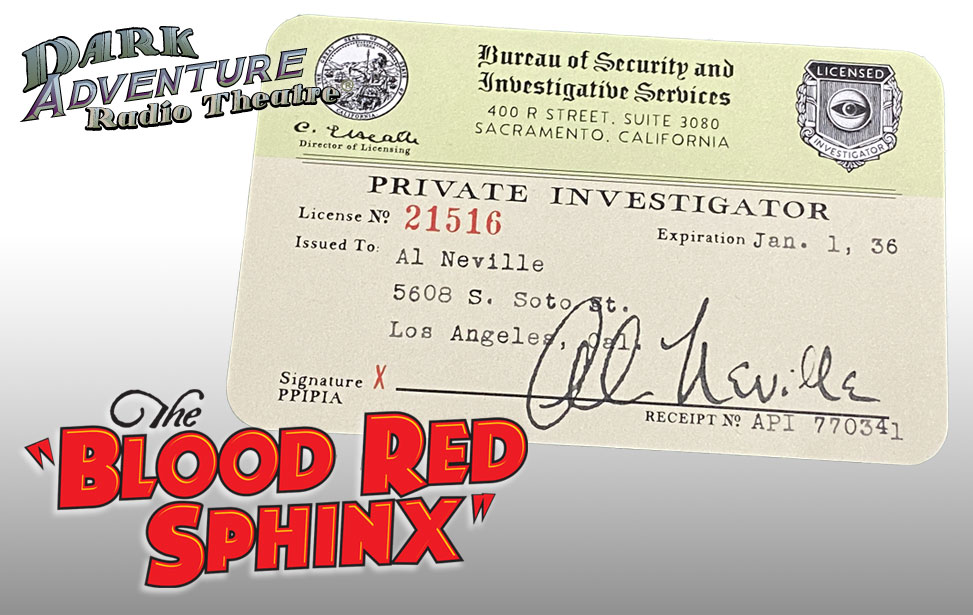
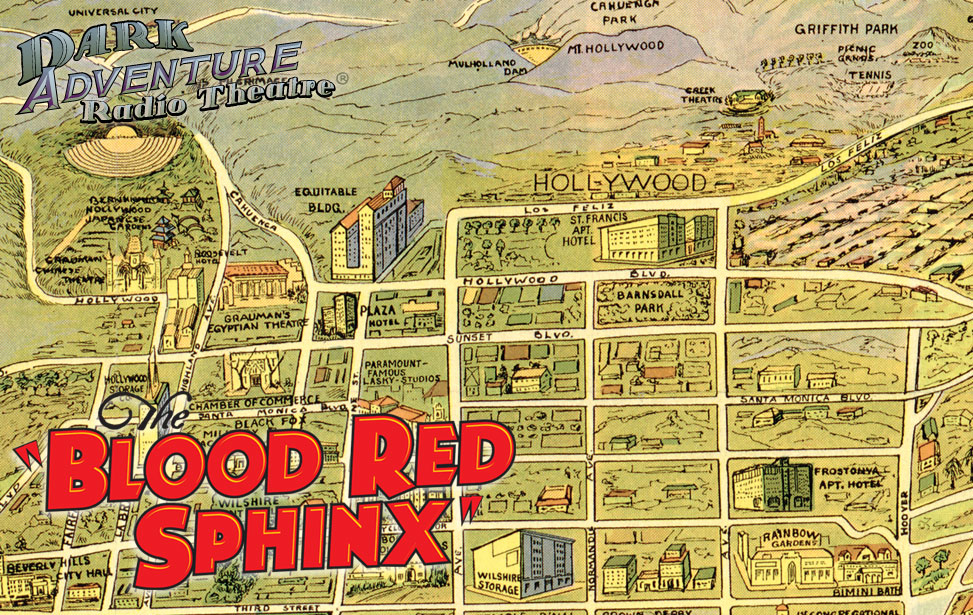
To enhance your listening pleasure, the HPLHS has packed the binder sleeve for The Blood Red Sphinx with carefully created props from the story. You'll get:
Track Listing
1. Fade In 3:25
2. The Protagonist 6:10
3. The Studio 17:59
4. The Plot Twist 16:15
5. The Wide Shot 9:10
6. The Subplot 11:19
7. The Close-up 11:32
8. The Set Piece 13:59
9. Fade Out 1:33
Total Runtime 91:55
Cast and Crew
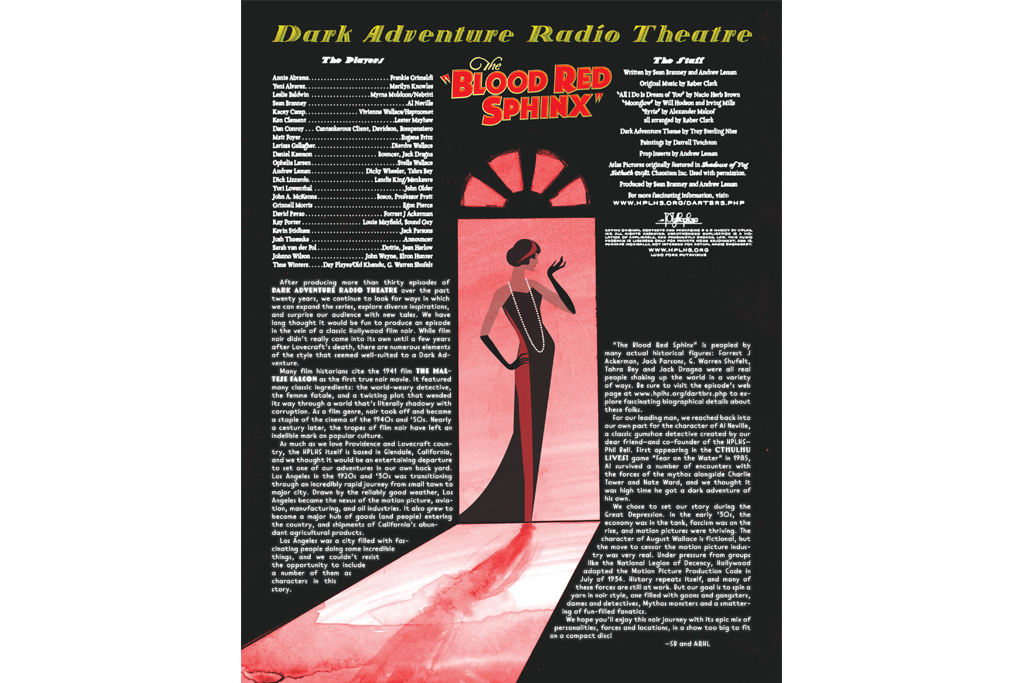
Annie Abrams...Frankie Grimaldi
Yeni Alvarez...Marilyn Knowles
Leslie Baldwin...Myrna Muldoon/(Nebtiti)
Sean Branney...Al Neville
Kacey Camp...Vivienne Wallace/(Haptoomet)
Ken Clement...Lester Mayhew
Dan Conroy....Cantankerous Client, Robert Davidson, Nicky Bompensiero
Matt Foyer....Eugene Fritz
Larissa Gallagher...Dierdre Wallace
Daniel Kaemon....Bouncer, Jack Dragna
Ophelia Larsen...Stella Wallace
Andrew Leman...Dicky Wheeler, Tahra Bey
Dick Lizzardo...Landis King/(Menkaure)
Yuri Lowenthal...John Older
John A. McKenna....Bosco, Professor Pratt
Grinnell Morris....Egon Pierce
David Pavao...Forrest J Ackerman
Ray Porter...Louie Mayfield, Sound Guy
Kevin Stidham...Jack Parsons
Josh Thoemke...Announcer
Sarah van der Pol...Dottie, Jean Harlow
Johnno Wilson...John Wayne, Elron Hunter
Time Winters...Day Player/(Old Khendu), G. Warren Shufelt
Written by Sean Branney & Andrew Leman
Original Music by Reber Clark
"The Continental" by Con Conrad
"All I Do Is Dream of You" by Nacio Herb Brown
"Moonglow" by Will Hudson and Irving Mills
"Syria" by Alexander Maloof, all arranged by Reber Clark
Dark Adventure Theme by Troy Sterling Nies
Paintings by Darrell Tutchton
Prop Inserts by Andrew Leman
Atlas Pictures originally featured in Shadows of Yog Sothoth ©1982 Chaosium Inc. Used with permission.
Produced by Sean Branney and Andrew Leman
Script, Liner Notes & More
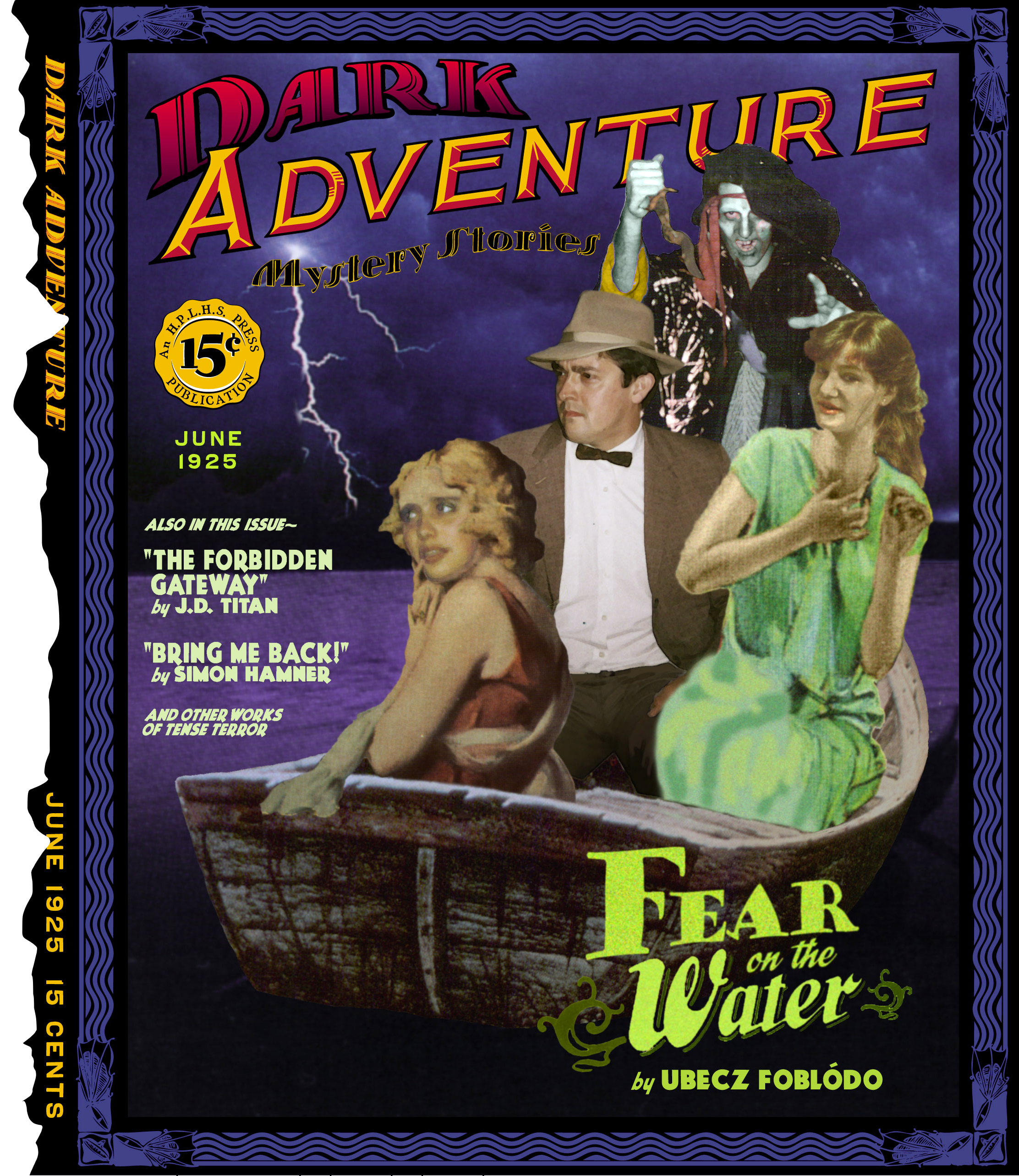 The character at the heart of this story is based on the original Cthulhu Lives! investigator character created by Phil Bell, one of the founders of the HPLHS. First appearing in "Fear on the Water", one of our home-grown LARPs in June of 1985, Al survived numerous encounters with the forces of the Mythos alongside Nate Ward, Charlie Tower and Jordan Lowell, and we thought it was high time he get a Dark Adventure of his own. Al, as played by Phil himself, is shown above on the cover of an issue of "Dark Adventure Mystery Stories" magazine (precursor to DART) along with fellow investigators Priscilla Darby (played by Jenny Wiens) and Suzie Author (played by Jackie Ritz), in a boat piloted by The Spectral Boatman (played by Darrell Tutchton, co-Keeper of the game with Sean Branney). Two of the other investigators in that game, Victoria Chesfleur (played by Anne Dillon) and J.D. Titan (played by Andrew Leman) stayed behind on shore, as it wasn't a very big boat. The game won three coveted Black Tentacle awards, including "Best Adventure"!
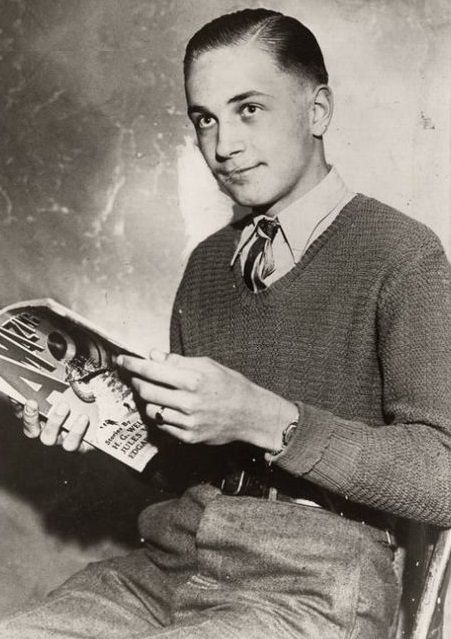 Forrest Ackerman (1916–2008) was an American magazine editor; science fiction writer, and literary agent; a founder of science fiction fandom; a leading expert on science fiction, horror, and fantasy films; a prominent advocate of the Esperanto language; and one of the world's most avid collectors of genre books and film memorabilia. He was based in Los Angeles, California. In 2016, the intersection of Franklin and Vermont Avenues in L.A. was dedicated as "Forrest J Ackerman Square".
Ackerman was central to the formation, organization, and spread of science fiction fandom and a key figure in the wider cultural perception of science fiction as a literary, art, and film genre, coining the genre nickname "sci-fi". He was also among the first and most outspoken advocates of Esperanto in the science fiction community. Ackerman was first entranced by the 1922 film One Glorious Day, which he called an "imagi-movie". He purchased his first science fiction magazine,
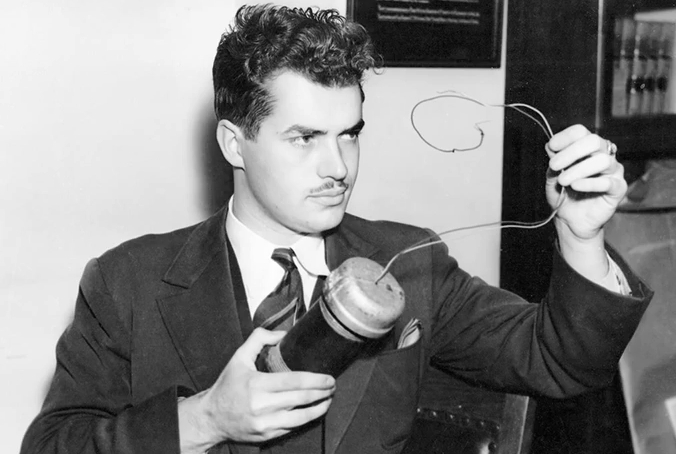 John Whiteside Parsons (1914–1952) was born in Los Angeles and raised in Pasadena, California, where he was a member of the Guggenheim Aeronautical Laboratory at CalTech and went on to become one of the founders of the Jet Propulsion Laboratory. In 1938, Forrest Ackerman invited Parsons to deliver a lecture on rocketry to the Los Angeles Science Fiction League. Parsons testified as an expert witness on explosives in the murder trial of a corrupt Los Angeles police officer who had planted a bomb in the car of a crusading private detective. When not pursuing rocket science, Parsons was actively involved in the esoteric and the occult. In 1939 he joined the Thelemite religious movement founded by Aliester Crowley, and became the leader of the California branch of Crowley's Ordo Templi Orientis in 1942. He was dismissed from JPL due to his involvement in the occult and his reputation for hazardous laboratory practices. He died at the age of 37 in a home laboratory explosion that was officially ruled an accident but which friends suspected with either suicide or murder. Although publicly unknown during his lifetime, Parsons is now recognized for his innovations in rocket engineering, advocacy of space exploration and human spaceflight, and as an important figure in the history of the U.S. space program. He has been the subject of several biographies and fictionalized portrayals.
Like young HPL, Parsons grew up as an isolated child in a wealthy household, and was an early reader of mythology, Jules Verne, Arthurian legend and The Arabian Nights. He began reading science fiction in pulp magazines like Amazing Stories, which led to his interest in rocketry and space travel at a very young age. Also like HPL, Parsons was brilliant but never completed a college education. Unlike HPL, Parsons had a reputation for a very active libido.
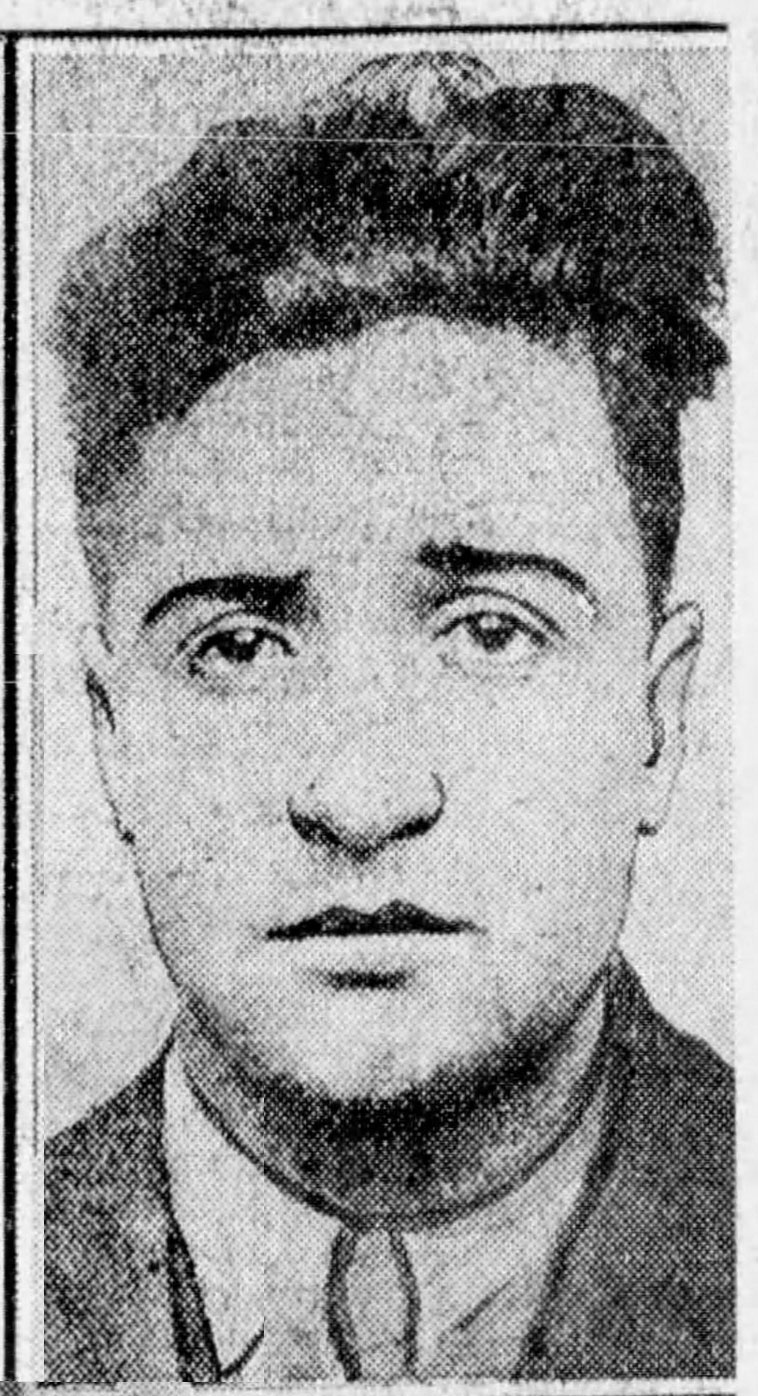 Jack Dragna (1891–1956) was born in Corleone, Sicily and emigrated to America first as a child with his family, and then again in 1914 after a return to Sicily, where he joined both the Italian army and the Mafia. He fled from murder charges in New York and ended up in Los Angeles during Prohibition, where he was a successful bootlegger. He became the leader of the Los Angeles crime family in 1931, after the mysterious disappearance of his predecessor, Joe Ardizzone. After Prohibition ended he made his money in gambling, extortion, prostitution and heroin smuggling, and continued as the “Capone of Los Angeles”—working with (and sometimes against) flashier mobsters like Bugsy Siegel and Mickey Cohen—until his death.
For a fascinating story about how Jack Parsons, Jack Dragna, and Clifton's Cafeteria all connect, check this out!
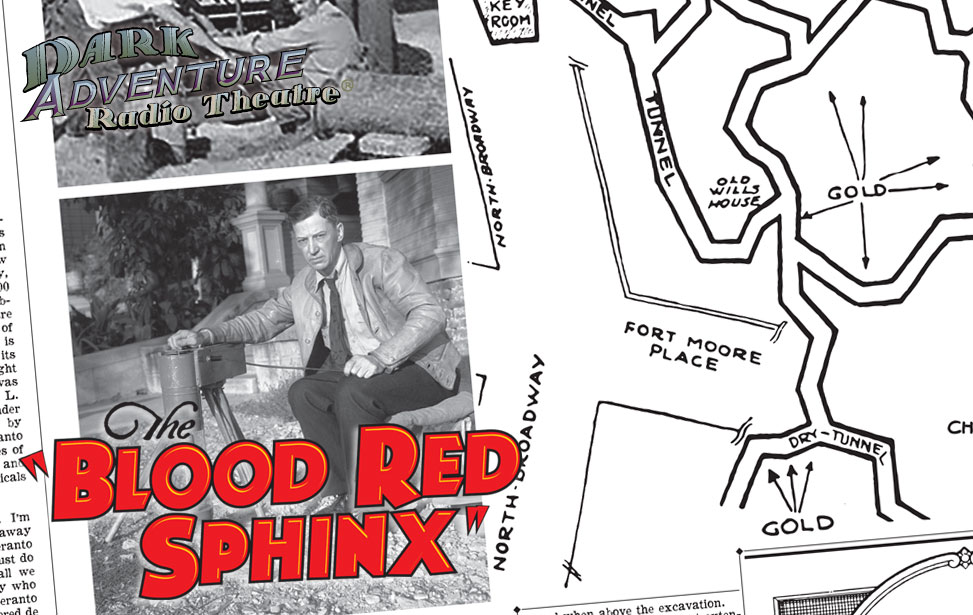
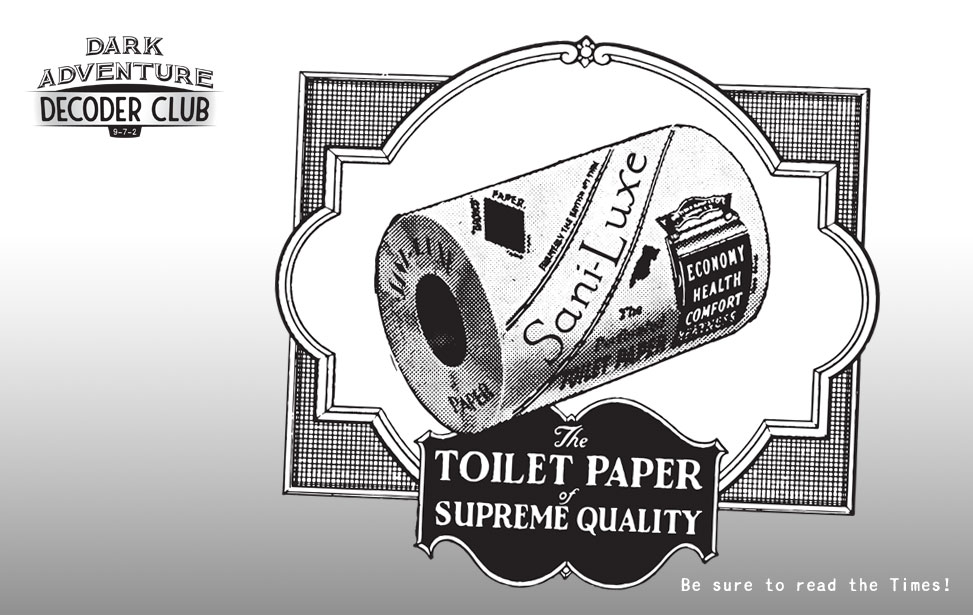
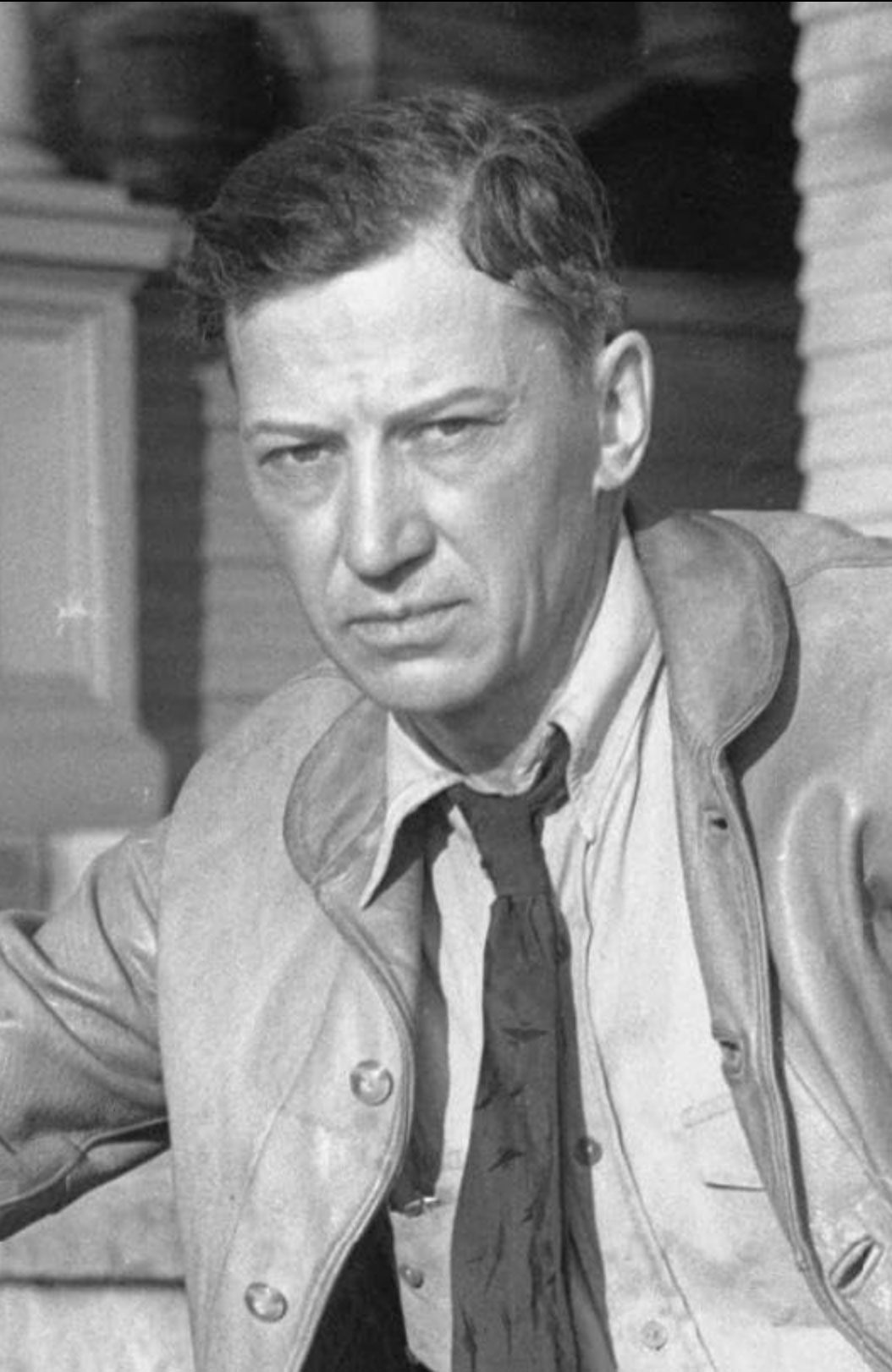 George Warren Shufelt (1886–1957) was born in Ohio, and spent his early career as a salesman before moving to Los Angeles in the 1930s. Although he was described in census records and newspaper articles as a "mining engineer", it seems quite possible that he was merely a crackpot inventor with dreams of finding gold. The prop page from the Los Angeles Times included with this episode is a painstaking replica of the real newspaper coverage telling his story. There really were (and are) networks of tunnels under Los Angeles, some used by smugglers during Prohibition, but Shufelt never turned up any real evidence of Lizard People, and after his brief time as a newspaper sensation he vanished into obscurity. Reptilian humanoids, on the other hand, are still going strong, having been a staple of myth, folklore and science fiction for ages, and have found their way into numerous conspiracy theories.
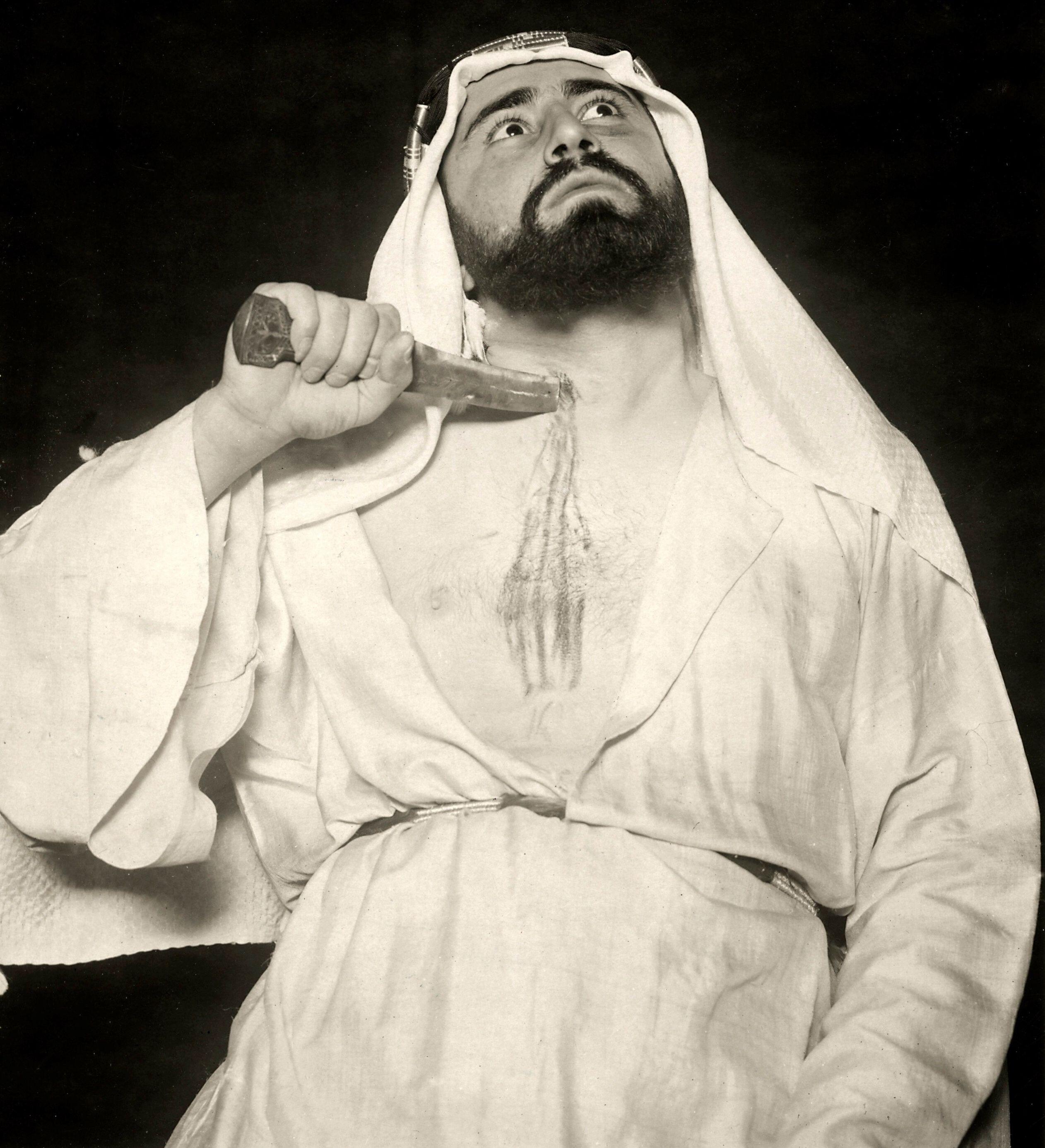 Tahra Bey (c.1900–????) was born Krikor Kalfayan to Armenian parents in Constantinople. He ended up as a refugee in Athens in the early 1920s, where he worked as a bookseller and made a name for himself as a fakir capable of amazing feats of mental control of his own body, and developed a devoted following. He enjoyed tremendous fame and success on stages in Greece, Italy and France, and reinvented himself as an Egyptian to avoid the virulent European anti-Armenian prejudice of the time. Whatever genuine spirituality might have been part of his act in the beginning seems to have been overshadowed by the glamor of show business by the mid 1930s. His success encouraged numerous imitators, including one who dubbed himself Rahman Bey, who attempted to replicate in London the show that Tahra Bey had been performing in Paris. The British were not impressed, however, and Rahman Bey made his way to a generally friendlier reception in New York.
Fakirism was quite a craze throughout the 1920s, and we were fascinated to learn about it in the excellent book Holy Men of the Electromagnetic Age by Raphael Cormack, which we heartily recommend.
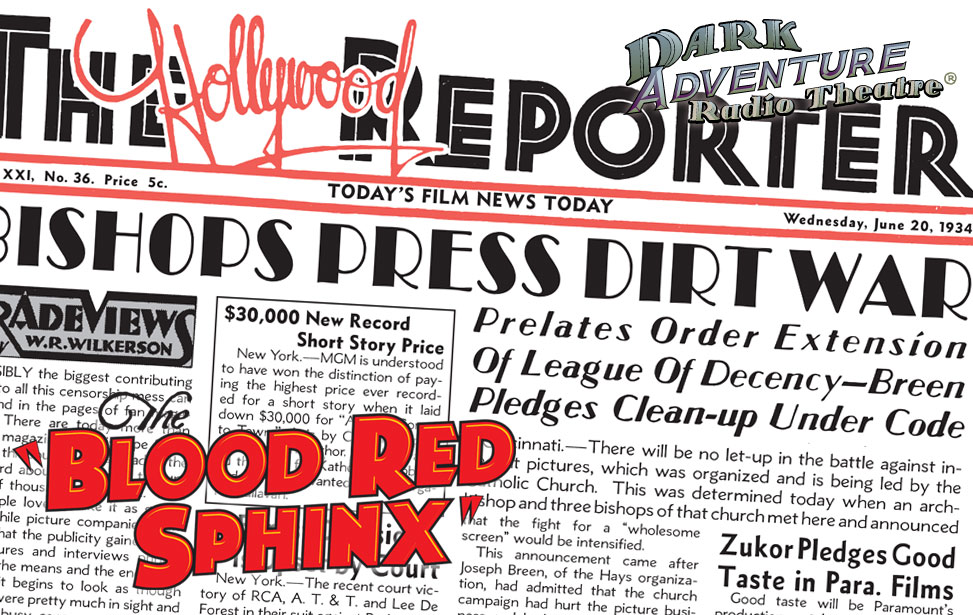
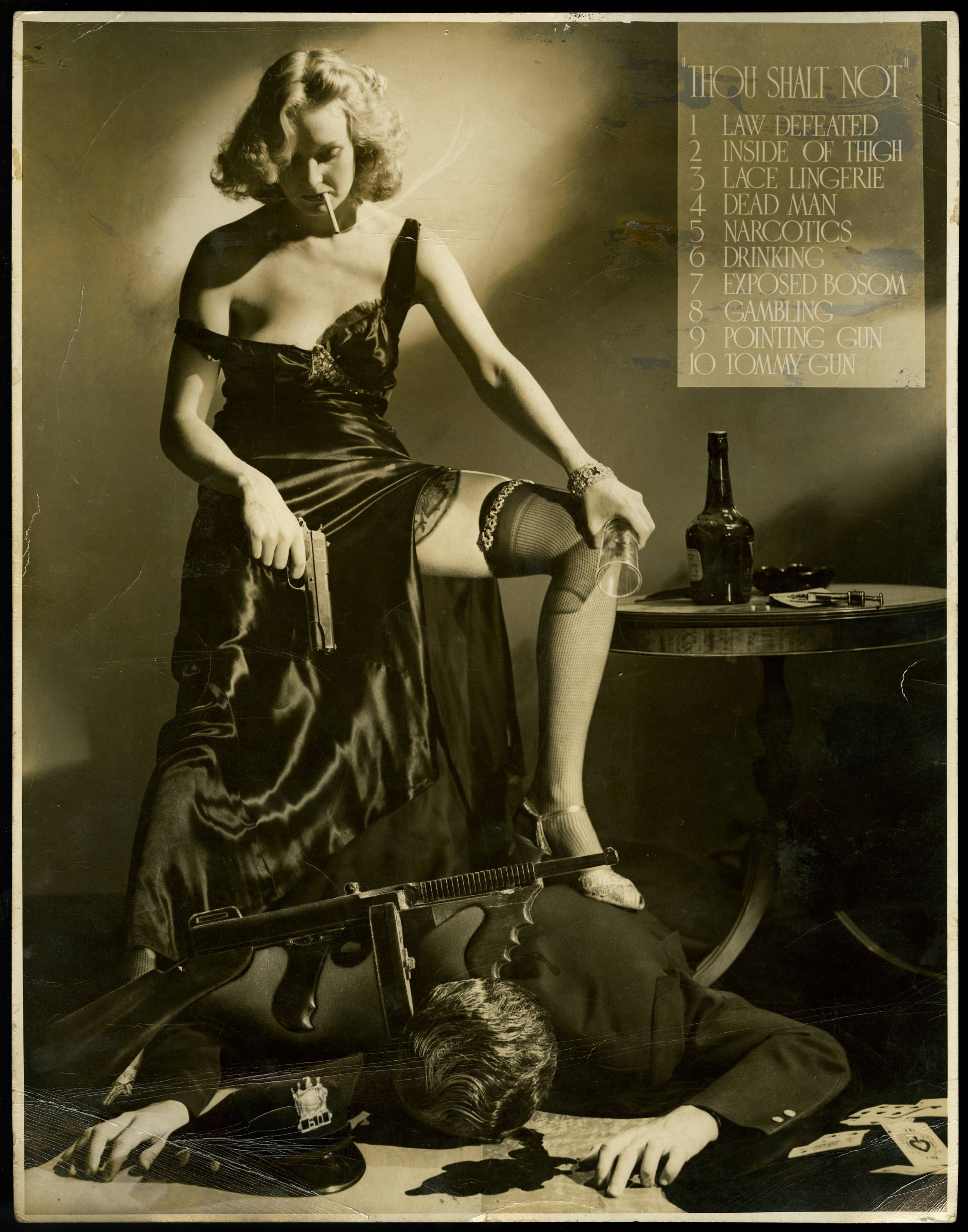 The character of August Wallace in this episode is fictional, but the movement to censor movies in the mid-1930s was very real. In the wake of a 1915 Supreme Court decision which declared that freedom of speech did not extend to motion pictures, followed by a number of shocking Hollywood incidents involving rape and murder in the early 1920s, the motion picture industry was looking at a state-by-state patchwork of standards and censorship laws that would have made the national release of movies extremely difficult. In order to avoid further governmental action, the industry decided it would be better to police itself. Guided by a variety of Catholic and other religious leaders, noted Republican political operative Will Hays, who had been the Postmaster General in the Harding administration, was hired in 1924 to control Hollywood's scandalous image. For several years he attempted to codify what was and was not acceptable in motion pictures, with lists of "don'ts" and "be carefuls". None of his lists was particularly enforceable, and by the early 1930s — by which time talkies had supplanted silent film — there was an ever greater hue and cry from moralists to censor Hollywood.
Rigorously enforced by Hays' lieutenant Joseph Breen, a conservative Catholic layman, the official Motion Picture Production Code was put into effect in July of 1934. All films produced in Hollywood had to submit to approval by the Production Code Administration before they could be released to the public. Some earlier films were remade in order to comply with the code, including the 1931 version ofThe Maltese Falcon, and Dr. Jekyll and Mr. Hyde, which had been made twice before in 1920 and 1931. The code didn't only prevent depictions of sex, violence, drugs and interracial relationships; it also fostered political censorship of ideas. Many filmmakers worked to circumvent compliance, and some studios released their films on a state-by-state basis in order to avoid it where possible. The picture above, "Thou Shalt Not", was taken in 1940 by Hollywood photographer Whitey Schafer to show as many code violations as possible in a single image.
The advent of television added competition for Hollywood and put pressure on movies to return to more explicit content, but Hollywood's output was largely governed by the code until 1968, when the G/PG/R rating system was introduced. Many people had observed from the very beginning that people who were offended by movies didn't have to go see them, but that very obvious and common-sense idea doesn't seem to have ever gotten any traction.
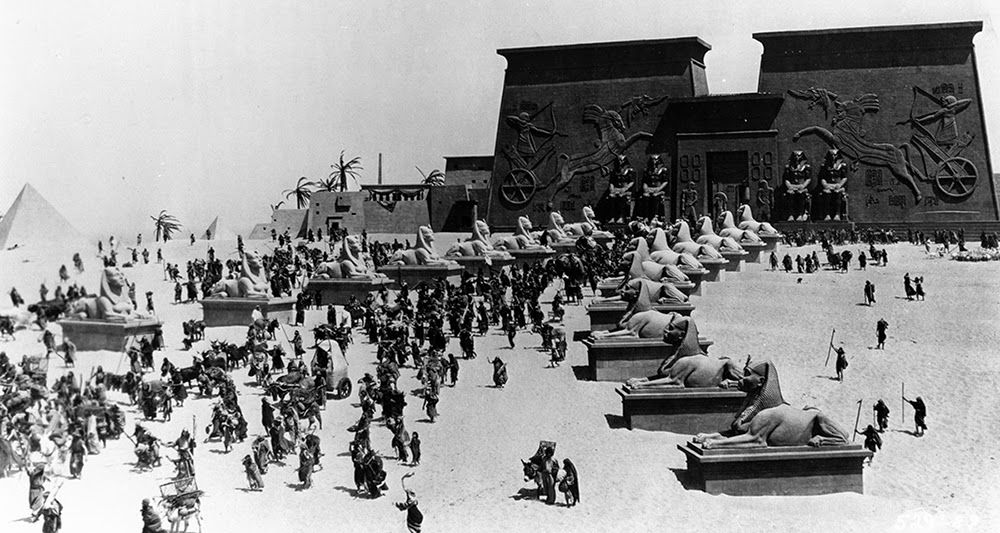 Another classic film that was re-made after the Production Code was enacted was Cecil B. DeMille's The Ten Commandments. The 1956 version with Charlton Heston is now far more famous, but DeMille made it the first time in 1923, and he built massive Egyptian sets in the Guadalupe-Nipomo Dunes in Southern California, including an avenue of sphinxes seen above. When production wrapped, DeMille ordered that the sets be demolished and buried in the sand to prevent anyone else from reusing them, and to save the expense of hauling them away. They are still buried there. You can learn more about it in the documentary The Lost City of Cecil B. DeMille
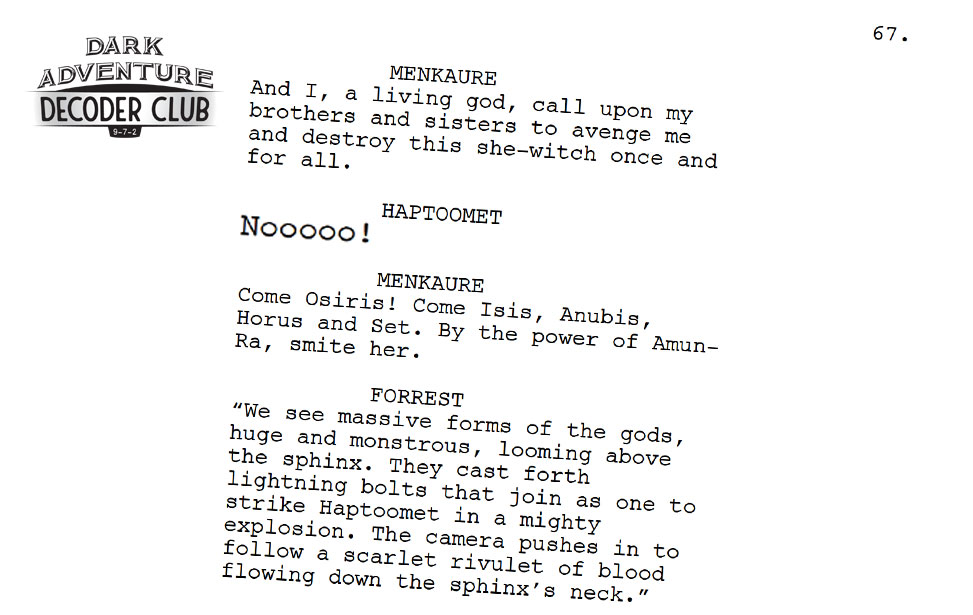
For your enjoyment, we present free PDF downloads of the final recording script and liner notes of "The Blood Red Sphinx". Note: this script is only for use for reading along with Dark Adventure Radio Theatre®; no publication or performance of the script may be made without written consent of the HPLHS.